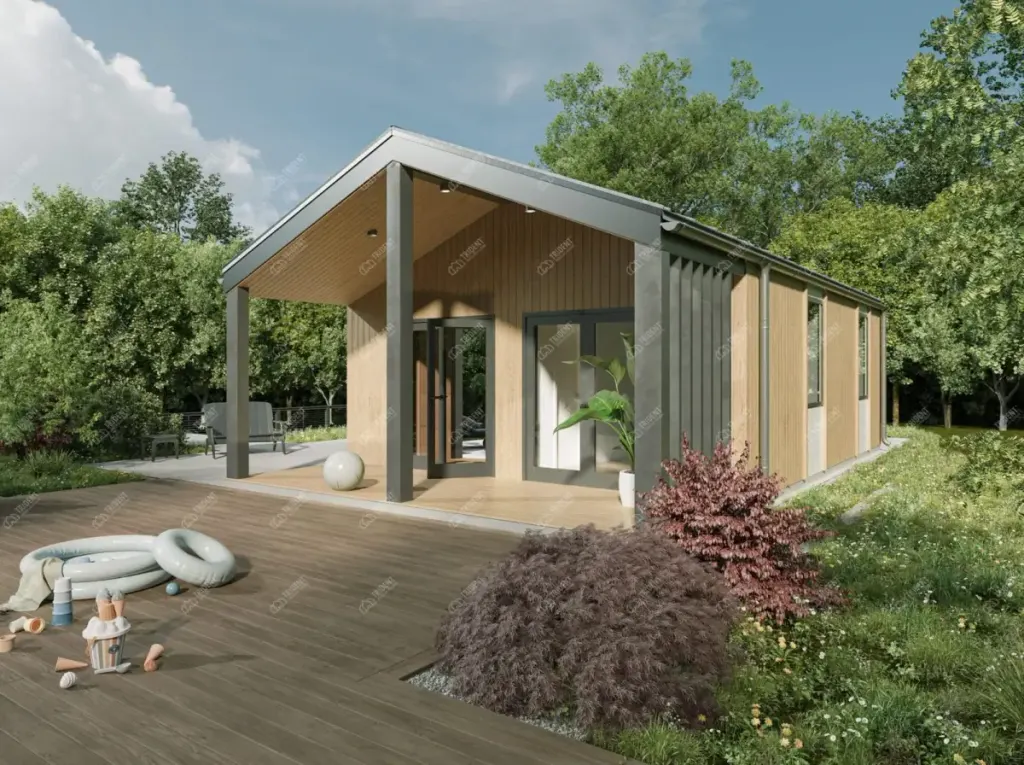
Why Modular Living Is Redefining Modern Space
At Trident Modular, we believe a house should adapt to your life — not the other way around. Modular construction has evolved far beyond temporary cabins or prefabricated sheds. Today, modular houses are fully insulated, architecturally refined structures that deliver performance, flexibility, and speed without compromising on design.
Whether installed in a garden, on private land, or as part of a larger development, modular houses unlock possibilities that traditional builds often cannot.
Below are the most powerful and practical best use cases of modular houses modular houses in today’s market.
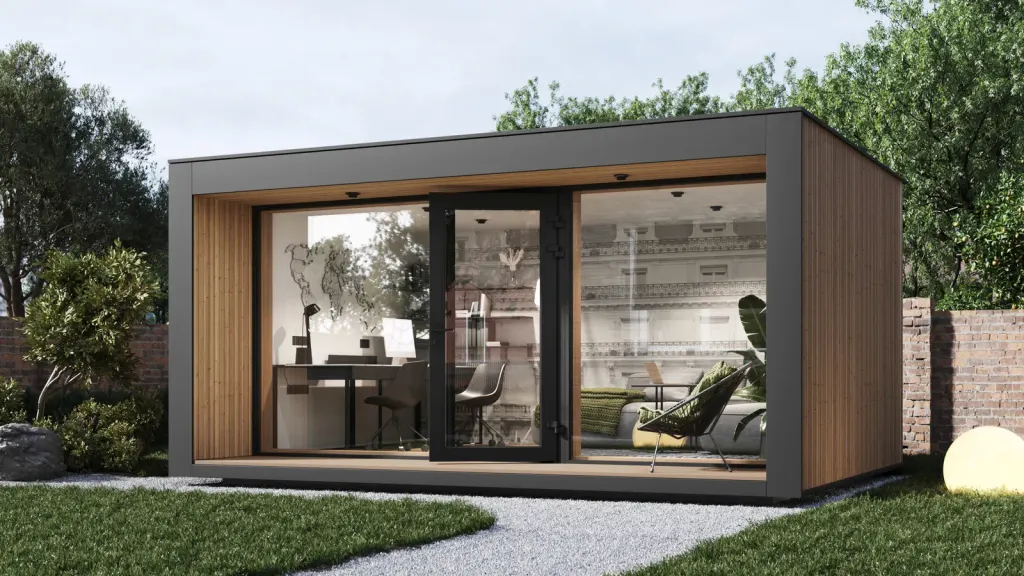
1. Garden Offices That Feel Like Real Workspaces
Remote work is here to stay. A modular garden office gives you:
- Complete separation from the main house
- Sound insulation and privacy
- Energy efficiency for year-round use
- A professional environment just steps away
Unlike makeshift home offices, a properly insulated modular structure maintains comfort in both winter and summer. Large glazing panels bring in natural light, increasing productivity and well-being.
For professionals in London especially, where indoor space is often limited, a garden office transforms unused outdoor space into high-value square footage.
2. Guest Houses & Private Accommodation
One of the most popular uses of modular homes is as:
- Guest houses
- Independent living spaces for family members
- Short-term rental units
- Private retreats
With proper insulation, bathroom integration, and kitchenettes, modular houses can function as fully self-contained living units.
They provide independence while keeping loved ones close — ideal for multi-generational living arrangements.
3. Creative Studios & Personal Retreats
Artists, designers, writers, musicians, and creators benefit enormously from dedicated space. A modular studio can become:
- An art studio with full-height glazing
- A music rehearsal space
- A photography room
- A yoga or meditation retreat
The beauty of modular design is that the layout can be optimised for purpose — open-plan interiors, high ceilings, custom lighting, and acoustic upgrades.
When space is intentionally designed for creativity, output naturally improves.
4. Rental & Investment Units
Modular houses are increasingly used as:
- Short-term rental units
- Airbnb-style accommodations
- Secondary income properties
- Backyard rental studios
Because modular construction is faster and more predictable than traditional building, investors benefit from:
- Shorter build timelines
- Controlled construction costs
- Faster return on investment
In high-demand areas like London and surrounding regions, compact modular homes can generate strong rental yields while occupying minimal land footprint.
5. Holiday Lodges & Modular Resorts
Beyond private gardens, modular houses are ideal for:
- Countryside retreats
- Resort-style developments
- Glamping sites
- Luxury cabin projects
Their precision construction ensures structural durability, while modern design elevates the aesthetic beyond traditional log cabins.
Modular buildings can also be scaled — meaning developers can expand sites in phases without disrupting existing units.
6. Home Gyms & Wellness Spaces
Health-focused living is another growing use case. A modular house can become:
- A private gym
- A Pilates studio
- A sauna & recovery suite
- A cold plunge retreat
Unlike converting a garage or spare room, a modular structure allows for proper ventilation, reinforced flooring, and purpose-built layouts.
Wellness becomes a dedicated environment — not an afterthought.
7. Modular Family Extensions
In many cases, homeowners want additional space but prefer not to disrupt their existing house structure. Modular houses offer:
- Detached extensions
- Office-to-bedroom conversions
- Independent teenage living spaces
- Transitional housing during renovations
Because modular construction happens off-site, installation time on your property is dramatically reduced compared to traditional brick extensions.
8. Temporary-to-Permanent Flexibility
One of modular construction’s biggest advantages is flexibility. Units can be:
- Relocated
- Expanded
- Reconfigured
- Upgraded over time
This adaptability makes modular homes suitable for evolving life circumstances — growing families, changing work patterns, or investment diversification.
Why Modular Makes Strategic Sense
Modern modular construction delivers:
- Precision engineering
- High-performance insulation
- Energy efficiency
- Predictable build timelines
- Reduced on-site disruption
For urban environments like London, where planning, logistics, and space constraints can complicate traditional builds, modular housing offers a streamlined alternative.
Is a Modular House Right for You?
Modular houses are ideal if you:
- Want fast, high-quality construction
- Need additional living or working space
- Value architectural flexibility
- Prefer minimal disruption during build
- See property as both lifestyle and investment
From garden studios to full-scale modular living spaces, the applications are nearly limitless.
Final Thoughts on the best use cases of modular houses
Modular houses are no longer an alternative solution — they are a forward-thinking one. With architectural freedom, speed of installation, and exceptional versatility, they provide answers to modern space challenges in ways traditional construction often cannot.
At Trident Modular, we design modular houses that integrate seamlessly into your lifestyle — whether that’s a quiet garden office, a luxury guest house, or a revenue-generating rental unit.
If you’re considering expanding your space, modular construction may be the most intelligent way forward.